
The science behind Aikido techniques
World Aikido Yoga
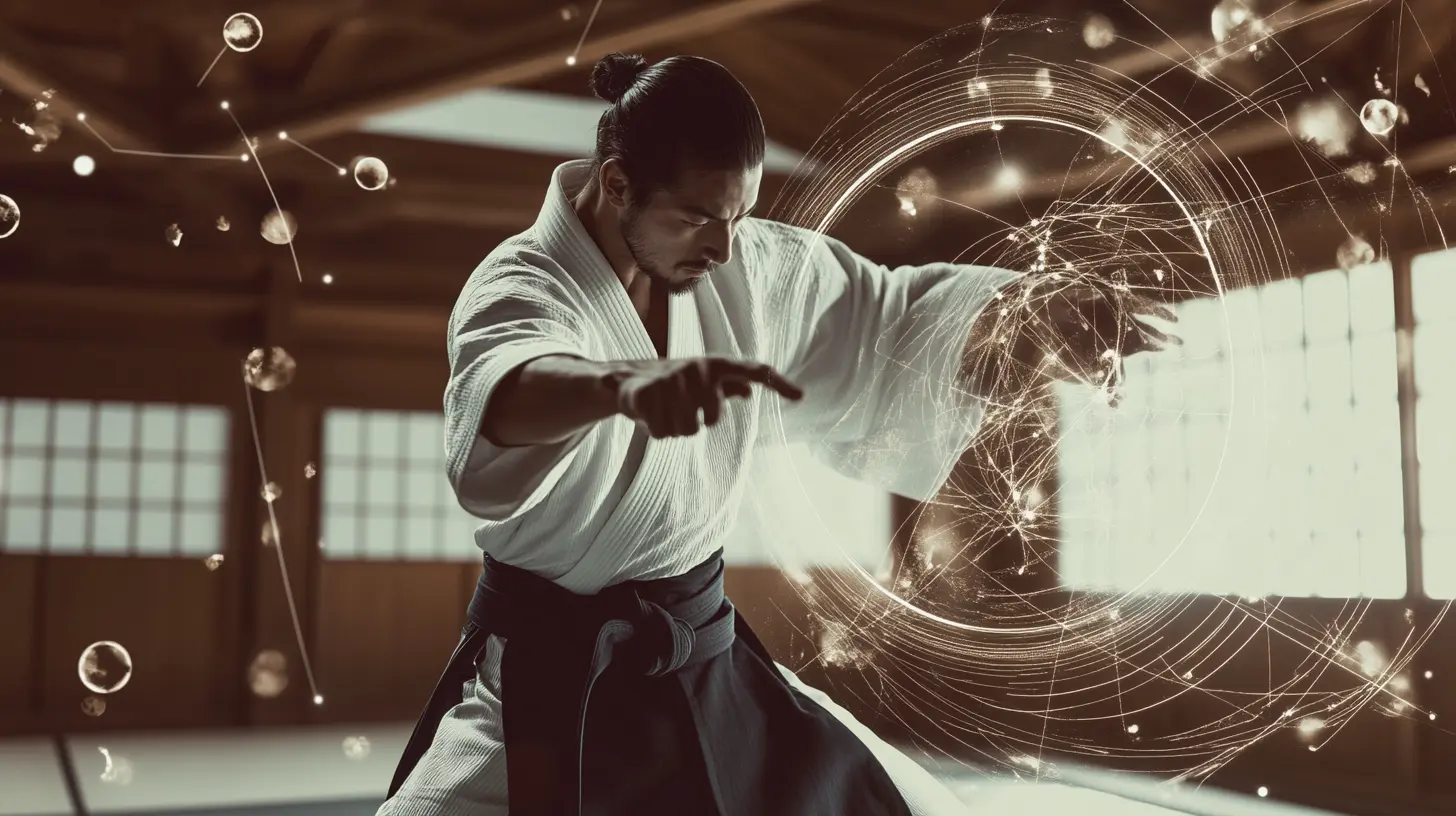
Aikido, with its fluid movements and harmonious philosophy, is more than just a martial art. It stands out by emphasising technique and spirit over brute force, offering a unique perspective into self-defence and personal development. The fascinating science behind Aikido techniques merges principles of physics, psychology, and anatomy, creating an art form that not only defends but also enriches the practitioner’s mind and body.
The physics of Aikido: Understanding motion and energy
Leverage and balance in Aikido
Aikido techniques exploit the principles of leverage and balance, allowing practitioners to redirect an attacker’s force rather than confront it directly. By understanding your centre of gravity and your attacker’s, you can manipulate their balance with minimal effort. This aspect of Aikido is rooted in Newton’s Third Law of Motion, which states that for every action, there is an equal and opposite reaction. By redirecting the force, Aikidoka (Aikido practitioners) apply these principles to create powerful techniques.
Momentum and circular motion
Circular motion is core to Aikido’s techniques and philosophies. Practitioners use centripetal force to guide and control an attacker’s momentum in a graceful arc. This motion dissipates the attacker’s energy, invalidating their aggressive intentions. By integrating these circular movements, Aikido not only neutralises attacks but also embodies a symbolic convergence of physical and philosophical ideals—demonstrating that harmony and understanding can supersede conflict.
Biomechanics and joint manipulation
Aikido’s focus on biomechanics and joint manipulation also draws from scientific principles. Techniques like Nikyo and Sankyo involve manipulating joints using precise angles to exert minimal yet effective force. These movements exploit the limits of human anatomical structure, encouraging an opponent to comply or submit without causing injury. This understanding of biomechanics allows Aikido practitioners to use efficient joint manipulations that maximise control and minimise harm.
Psychological aspects of Aikido: Mind over matter
The art of remaining calm under pressure
Aikido training incorporates mental resilience, encouraging practitioners to maintain calmness under pressure. It taps into the psychological concept of flow state, where a person is fully immersed and present, enhancing decision-making and reactions. This mental clarity is vital for effective technique application, making Aikido not just a physical discipline but a mental one as well.
Harnessing intuition and nonverbal communication
Aikido also emphasises intuitive movement and understanding an opponent’s intentions through nonverbal cues—an area well-explored in the field of psychology. Practitioners are trained to ‘read’ an attacker’s intent, enabling them to respond with appropriate techniques instinctively. Building this intuition involves cultivating heightened awareness, which can be a valuable skill both on and off the mat.
The anatomy of Aikido: Body dynamics
Developing physical awareness
Practitioners gain a deeper awareness of their physical body through Aikido training. This involves understanding one’s own body dynamics and the subtle shifts in weight and posture that occur during movement. By refining this awareness, Aikido practitioners can more effectively implement techniques and handle various physical interactions efficiently.
Muscle memory and neural adaptation
Over time, repeated practice of Aikido techniques leads to muscle memory and neural adaptation. This concept, rooted in neuroscience, suggests that consistent repetition of movements fosters changes in the brain’s structure and pathways, making techniques instinctual. These adaptations enable practitioners to perform complex movements with fluidity and precision under pressure, showcasing the interaction between mind and body in martial arts.
The synergy of Aikido, yoga, and meditation
Integrating mindfulness in martial arts
Aikido shares many philosophical and physical connections with yoga and meditation. Incorporating mindfulness into martial arts training enhances a person’s ability to remain centred and focused. Meditative practices complement Aikido by promoting a sense of peace and concentration, thereby improving overall performance both mentally and physically.
Enhancing flexibility and control
Yoga offers benefits of improved flexibility, balance, and physical control—qualities beneficial to Aikido practitioners. Poses that increase range of motion and strengthen the core aid in performing Aikido techniques with ease and efficiency.
Summary
The science behind Aikido techniques bridges the gap between physical laws, psychological insights, and body mechanics. By understanding these principles, practitioners harness the full potential of Aikido, embodying its core ethos of defence through harmony. As a holistic discipline, Aikido offers profound benefits for self-defence, personal growth, and the pursuit of harmony in life. By integrating yoga and meditation, practitioners further enrich their experience, enhancing both their physical and mental capabilities. Whether you seek self-defence skills, personal development, or a deeper understanding of this art form, Aikido provides a path that resonates with respect, awareness, and peace.
Frequently asked questions
What is the primary focus of Aikido techniques?+
Aikido techniques primarily focus on leveraging an opponent's force and using circular motion and joint manipulation to neutralise attacks without causing harm.
How does psychology play a role in Aikido?+
Psychological principles in Aikido involve cultivating mental resilience, intuitive movement, and nonverbal communication skills, enhancing a practitioner's ability to remain calm and responsive.
Why is physical awareness important in Aikido?+
Physical awareness is crucial in Aikido because it helps practitioners understand body dynamics, enabling effective technique implementation and smooth movement transitions.
Can yoga and meditation improve Aikido practice?+
Yes, yoga and meditation can significantly improve Aikido practice by enhancing flexibility, balance, concentration, and mindfulness, all of which benefit martial arts training.
How does Aikido differ from other martial arts in terms of technique?+
Aikido differs from other martial arts by focusing on harmony and non-aggression. Its techniques primarily redirect an attacker's energy rather than confronting it directly, aiming for non-violence and self-improvement.