
Incorporating meditation into your Aikido routine
World Aikido Yoga
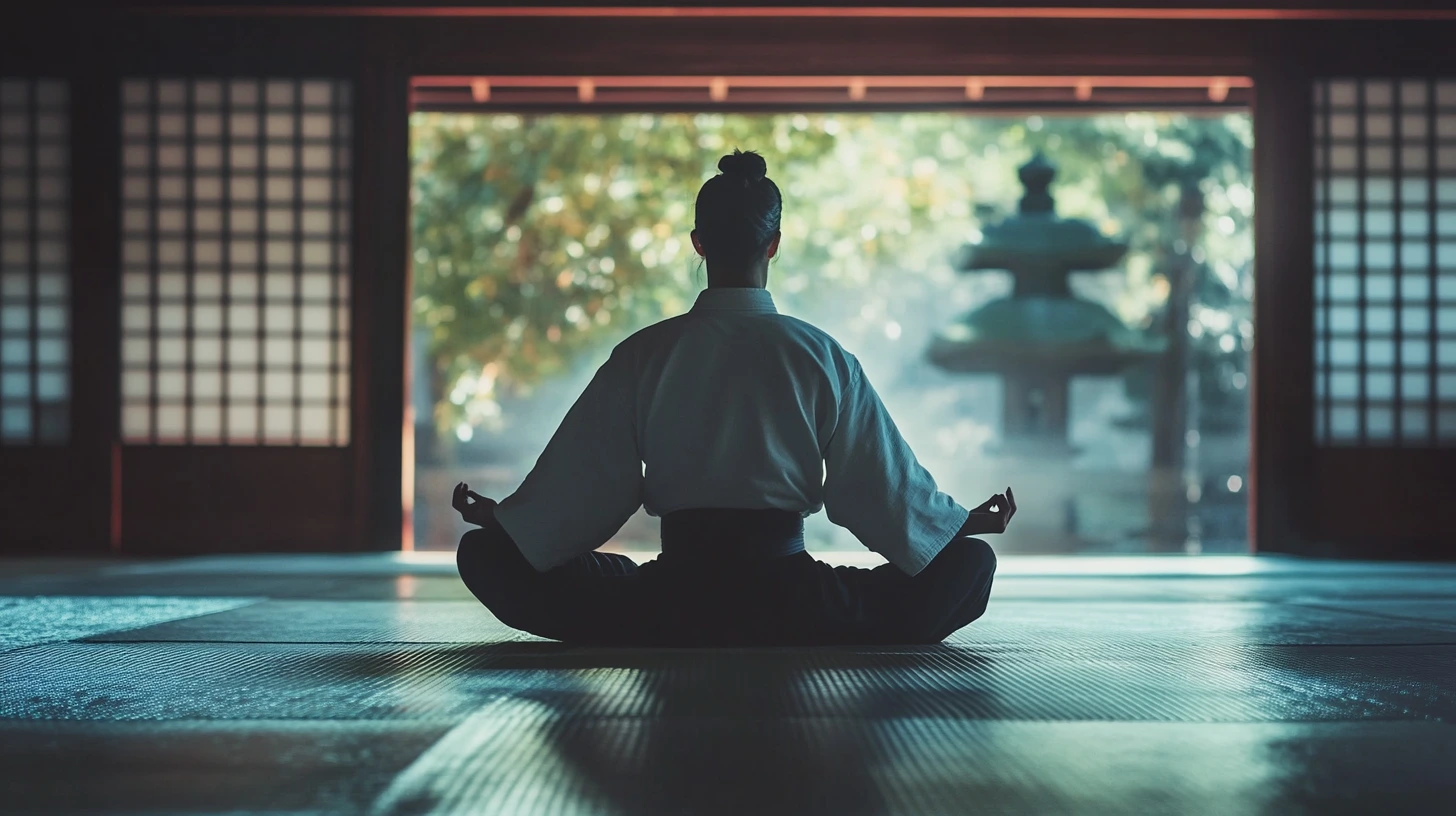
In the bustling world we live in, finding stillness and peace can feel like a luxury or an unattainable goal. Yet, for practitioners of Aikido, incorporating meditation into their routine may bring an unexpected harmony and deepen their practice. In this article, we explore the symbiotic relationship between Aikido and meditation, offering insights into how and why meditation could be an essential part of your Aikido journey.
The mind-body connection in Aikido
The intrinsic philosophy of Aikido emphasises harmony, balance and a seamless flow of motion. As a martial art, it not only focuses on physical techniques but also stresses the importance of mental clarity and emotional calmness. This is where meditation comes into play, offering a powerful tool to enhance this mind-body connection.
Meditation can significantly improve concentration and awareness, traits essential for mastering Aikido. According to a study published in “Psychological Science,” regular meditation can enhance attentional capacities and working memory, crucial for learning and executing complex movements (source). It helps you remain centred and calm, even under pressure, improving your overall Aikido practice.
Boosting mental clarity
Meditation can be a game-changer when it comes to achieving mental clarity. By focusing on the present moment and breathing techniques, practitioners can clear their minds of distractions and engage more fully with their Aikido practice. Studies suggest that mindfulness meditation can positively influence cognitive flexibility and problem-solving skills (source). This cognitive enhancement can translate directly to improved performance on the mat, allowing you to better anticipate and react to partners’ movements.
Emotional resilience through meditation
Emotional resilience is another invaluable asset refined through meditation. Practising Aikido with a calm, balanced mind allows practitioners to respond rather than react, adhering to the principles of Aikido. Meditation encourages emotional regulation, providing a space to process emotions and reduce stress levels. Scientific research has shown that mindfulness practices can lower stress markers, such as cortisol levels (source), enabling Aikido practitioners to maintain composure and focus.
Techniques to blend meditation with Aikido
Incorporating meditation with Aikido doesn’t mean reserving time for prolonged sit-down sessions. Instead, there’s a variety of accessible meditation techniques that can be integrated seamlessly into your Aikido routine.
Breathing meditation
Focusing on breath is one of the simplest yet most effective meditation techniques to practice. Breathing serves as a bridge between the mind and body and is fundamental in Aikido training. By integrating controlled breathing exercises, you can enhance relaxation and focus, directly translating to improved techniques and movements, as shown in breathing research (source).
Mindful movement
Aikido itself can become a form of moving meditation. Mindful movement seeks to synchronize the breath with movement, a practice of aligning body and mind. By doing so, practitioners become more attuned to the subtleties of motion, both in themselves and their practice partners, fostering a deeper understanding of the art.
Guided visualisation
Guided visualisation incorporates imagery to enhance meditation. For instance, imagining oneself performing Aikido moves with grace and confidence can have a significant impact. This mental rehearsal is supported by sports psychology, which suggests that visualisation can improve motor performance and boost self-efficacy (source).
Common challenges and how to overcome them
Like any new practice, integrating meditation with Aikido presents challenges. Everyone faces different hurdles, but with persistence, they can be transformed into stepping stones.
Time management
Finding time for meditation in a busy schedule is a common barrier, but it is crucial for its benefits. Start with small increments, perhaps five minutes before training, and build gradually. Scheduling it into your routine can also help establish consistency.
Restlessness in meditation
Restlessness or difficulty in sitting still during meditation is common, especially for those new to the practice. Try beginning with walking meditation or practising mindful breathing during Aikido itself to accommodate this sensation.
Perceived lack of progress
Meditation often requires time for tangible benefits to become evident. Keep a journal of your experiences to track subtle changes in both meditation and Aikido practice over time. Remember, the journey itself holds the key to growth.
Summary
Integrating meditation into your Aikido routine offers profound benefits that extend beyond the mat. The synergy of mental clarity, emotional resilience, and enhanced mind-body connection can elevate your practice to new heights. As you embark on this meditative journey, remember that meditation is as individual as one’s Aikido practice itself. Embrace the exploration, experiment with different techniques, and above all, enjoy the journey of self-discovery and growth. Let these practices not only enhance your Aikido, but also your overall well-being.
Frequently asked questions
What type of meditation is best for Aikido practitioners?+
While many meditation forms can be beneficial, mindfulness meditation, breathing exercises, and mindful movement align well with Aikido's principles. They enhance concentration, relaxation, and coordination, key elements for effective Aikido practice.
How long should I meditate to notice a difference in my Aikido practice?+
The effects of meditation vary for each individual. Some may see benefits within a few weeks, while others may take a few months. Consistency is essential, so try to incorporate it into your regular routine, even if for short periods.
Can meditation reduce injury risk in Aikido?+
Yes, meditation can enhance body awareness and focus, potentially reducing the risk of injury by increasing your responsiveness to movements and improving your technique execution.
Is there a best time to meditate in connection with Aikido?+
Many find meditating before Aikido practice helps centre their mind and set intentions, while others prefer meditation after a session to relax and reflect on their experience. Experiment to see what works best for you.
Can I use a meditation app to help with my practice?+
Certainly! Meditation apps offer guided practices and reminders that can be beneficial for beginners and advanced practitioners alike, supporting the habit of regular meditation.