
Building resilience with Aikido
World Aikido Yoga
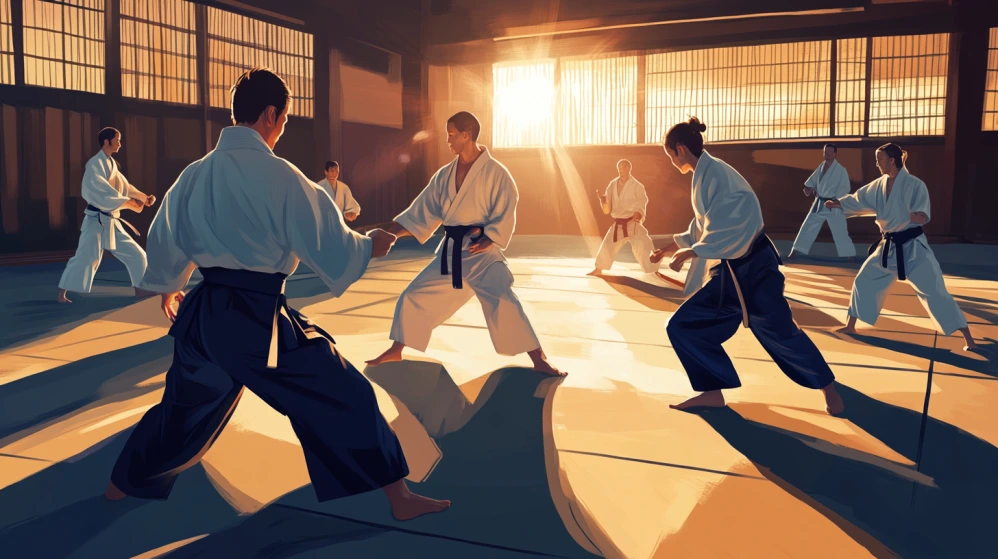
In today’s fast-paced world, building resilience is a powerful asset to navigate life’s challenges with strength and equanimity. Aikido, a Japanese martial art, offers unique insights into developing not only physical resilience but mental and emotional fortitude as well. At Aikido Bayside, we delve into the harmonious interplay of body, mind, and spirit, guiding practitioners to embrace resilience in every aspect of life.
Understanding resilience through Aikido
Resilience is the ability to recover quickly from difficulties. In Aikido, this concept is put into practice through consistent training that cultivates adaptability and strength. Aikido is not a martial art that relies on brute force but instead leverages an opponent’s energy through techniques that embody flexibility and fluidity. This reflects resilience by showing how to transform potential conflict into harmonious resolution.
The philosophy of harmony
Centrally, Aikido emphasises the principle of harmony rather than competition. Founder Morihei Ueshiba created Aikido after years of studying various martial arts, blending them with his spiritual philosophy focused on universal peace and unity. This foundational philosophy underscores that by understanding and aligning with life’s natural flow, one can navigate obstacles with grace rather than resistance.
Practising presence
Aikido training involves mindful movements that require practitioners to be fully present. Conscious engagement in techniques aids in improving focus and attention, essential qualities for building mental resilience. Various studies have highlighted how mindfulness practices can significantly bolster our mental health by reducing stress and anxiety, thereby enhancing our ability to bounce back from adversity.
Physical resilience through Aikido training
Regular practice of Aikido fosters physical resilience by improving flexibility, strength, and endurance. Unlike other martial arts, Aikido is accessible to all ages and fitness levels, as it promotes a gradual enhancement of physical capabilities.
Developing strength and flexibility
Through kihon (basic) movements and kata (forms), practitioners build muscle strength while maintaining joint flexibility. Strength and flexibility are critical components of physical resilience, providing the foundation needed to handle physical stress and recover from injuries more quickly.
Enhancing coordination and balance
Aikido’s dynamic techniques promote agility and balance, essential for preventing falls and maintaining a steady posture in everyday activities. These components are vital for resilience, enabling individuals to adapt swiftly to changing physical circumstances.
Emotional resilience with Aikido practice
Emotionally, Aikido instils the virtue of calmness and the ability to manage one’s emotions in the face of conflict. This dimension of resilience is crucial as it equips individuals to handle interpersonal conflicts and internal stress more effectively.
Embracing conflict
Aikido encourages accepting and embracing conflict as an opportunity for growth. By practising calmness under pressure on the mat, practitioners learn to apply the same techniques in real-life scenarios, maintaining emotional equilibrium when faced with challenges.
Building self-confidence
As students progress in Aikido, there’s a noticeable increase in self-confidence, gained from mastering complex techniques and promoting a deep understanding of one’s own capabilities. This self-assurance translates into a robust emotional resilience that enhances overall well-being.
Integrating yoga and meditation for holistic resilience
Aikido Bayside incorporates Yoga and Meditation to create a holistic approach to resilience. These practices complement Aikido by promoting relaxation and mental clarity, essential for thorough resilience.
Yoga: The connection of body and mind
Yoga enhances the benefits of Aikido by further developing physical strength and flexibility while fostering a deep connection between body and mind. Regular yoga practice aids in emotional balance and calmness, vital elements in building resilience.
Meditation: Cultivating inner peace
Meditation is a natural companion to Aikido, offering a unique opportunity to quiet the mind and focus inward. Regular meditation has been shown to reduce stress and enhance emotional well-being, playing a crucial role in mental resilience.
Summary
Resilience is not merely the ability to withstand difficulties but to thrive in the face of challenges. Aikido offers powerful tools to harness physical, mental, and emotional resilience through its philosophy of harmony, mindful practice, and dynamic techniques. By integrating complementary practices such as Yoga and Meditation, practitioners can achieve a holistic form of resilience that strengthens every facet of life. At Aikido Bayside, joining our robust community means embarking on a journey toward profound resilience and well-being.
Frequently asked questions
How does Aikido support mental resilience?+
Aikido supports mental resilience through its consistent practice of mindfulness and presence, helping practitioners focus and handle stress more effectively.
Can beginners benefit from Aikido for resilience?+
Absolutely. Aikido is tailored to beginners by fostering a supportive environment that promotes gradual physical and mental development, enhancing resilience over time.
Is physical fitness required to start Aikido?+
No. Aikido is suitable for all fitness levels as it focuses on technique rather than strength. It gradually improves conditioning and resilience without requiring prior fitness.
How do Yoga and Meditation enhance Aikido?+
Yoga and Meditation provide a holistic approach to resilience by offering complementary practices that improve physical flexibility, mental focus, and emotional calmness.
How often should I practice Aikido to build resilience?+
Consistency is key. Practising Aikido 2-3 times a week can effectively build resilience. Incremental practice, coupled with Yoga and Meditation, will optimise benefits.