
The Benefits of Aikido for Children
Aikido Bayside
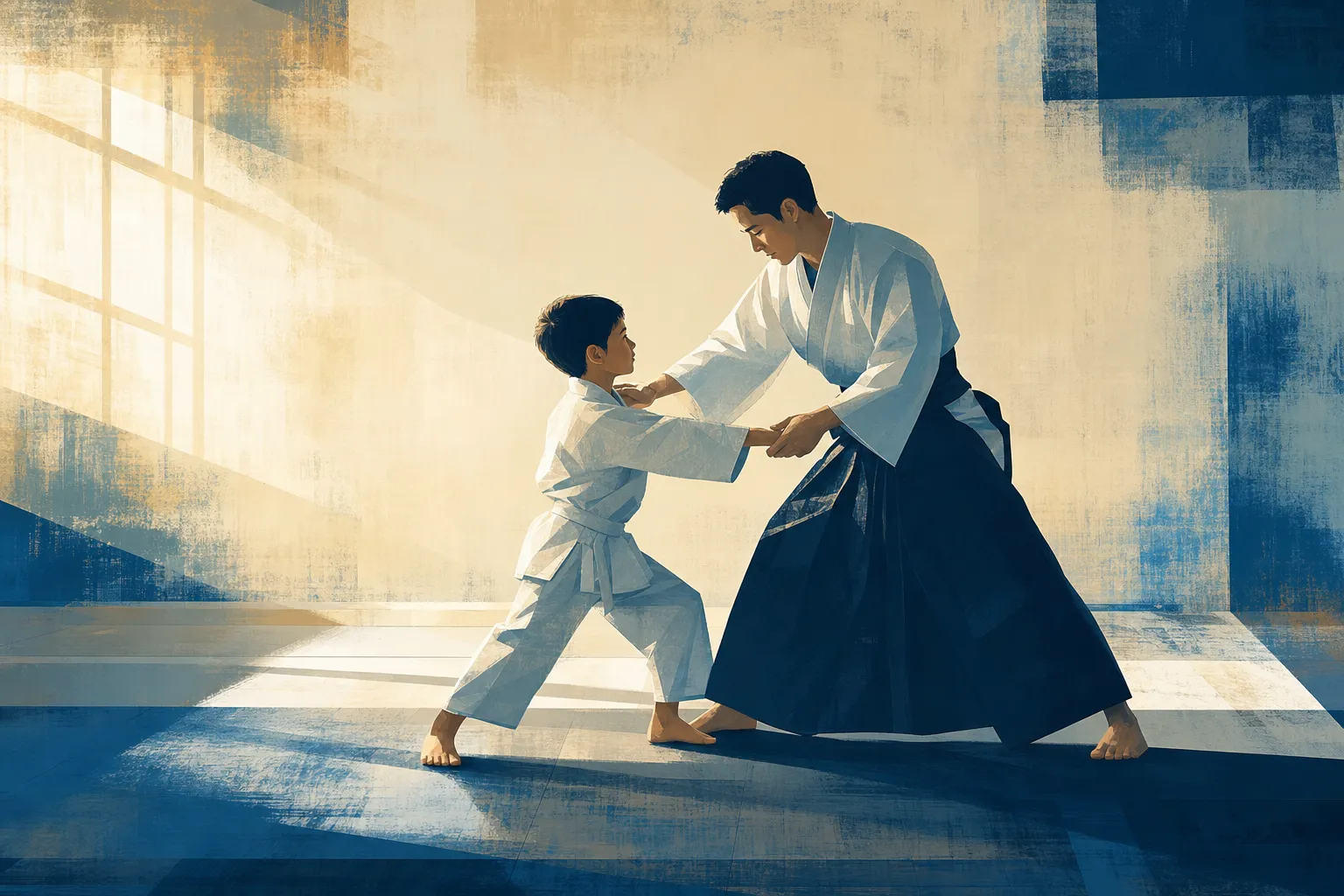
If you’re weighing up martial arts for your child, the questions that actually matter are rarely about kicks or throws — they’re about whether it’s safe, whether it’ll help your child grow, and whether they’ll actually want to keep going. This article covers what Aikido genuinely offers a child, what a class looks like in practice, and how to know if it’s the right fit.
The main benefits of Aikido for children are physical coordination and fitness, genuine self-defence skills built on redirection rather than force, and character growth — focus, self-control, and confidence — all developed in a non-competitive, supervised environment where no child is pushed to perform against another.
What is Aikido, and why does it suit children?
Aikido is a Japanese martial art, founded by Morihei Ueshiba (1883–1969), built on blending with an attacker’s movement rather than meeting force with force. At Aikido Bayside, children train in Aikido-Yoga — Aikido combined with Yoga practice — which adds breathing, flexibility, and mindfulness work alongside the martial art itself.
What makes this combination well-suited to children specifically is the absence of competition. There’s no sparring against the clock, no ranking a child against classmates by speed or strength. Every student — child or adult, complete beginner or advanced — progresses through a structured, graded curriculum at their own pace. For a child who’s shy about physical activity, or who’s been put off by more combative sports, that non-competitive structure often matters more than the martial art itself.
Is Aikido safe for children?
Safety is usually the first thing a parent wants settled, and it’s a reasonable thing to want settled before anything else. Aikido has no striking, no punching, no sparring in the way many other martial arts do. Techniques work through joint locks, throws, and redirecting an attacker’s own momentum — skills that are taught progressively and always under supervision.
Because the practice is cooperative rather than competitive, children aren’t put in a position where they need to “win” against another student to succeed. A class is closer to structured, guided practice with a partner than to contact sport. That doesn’t mean it isn’t physically demanding — it is — but the intensity is calibrated to the student’s own level, not forced by an opponent trying to overpower them.
How does Aikido build discipline and focus in children?
A graded curriculum gives children something concrete to work toward — the next technique, the next grading, the next belt. That structure teaches a kind of patience that’s hard to replicate in an unstructured activity: real progress takes repeated practice, and a child learns to sit with that rather than expecting instant results.
Aikido classes also require children to listen closely, follow multi-step instructions, and pay attention to a training partner’s safety as much as their own. Over time, that translates into better focus and self-control outside the dojo too — schoolwork, family life, and friendships all draw on the same muscle of “notice what’s happening, then respond calmly.”
What does a children’s Aikido class actually involve?
A typical class blends warm-up movement, technique practice with a partner, and the breathing and centring exercises drawn from the Yoga side of Aikido-Yoga. Children work alongside other students under Jules Aib’s direct instruction, progressing through the same graded pathway that adult students follow, adjusted to their age and ability.
Aikido Bayside doesn’t run a separate roped-off “kids only” hour — children train within the school’s regular Wednesday evening (6:30–8:30pm) and Saturday morning (9:00–11:00am, all belts) classes, alongside adult students. Families who’ve asked how a younger child copes in a mixed-age class often find this reassuring rather than daunting — see what other parents say on Aikido Bayside’s testimonials page.
How is this different from other kids’ martial arts programs?
Most martial arts marketed to children — karate, taekwondo, kickboxing — build toward some form of sparring or competitive grading. That can be exactly what an outgoing, competitive kid wants. It can also be exactly what puts a more sensitive or anxious child off entirely.
Aikido-Yoga doesn’t ask a child to compete against anyone. The measure of progress is the child’s own technique and understanding, not how they stack up against another student. Aikido Bayside is also a registered not-for-profit school, which shapes the whole approach — the goal is the student’s development and the wellbeing of the local community, not maximising enrolments. The School Code of Conduct sets out exactly what that looks like in practice, for parents who want the specifics in writing.
How do you get started?
The most reliable way to know if Aikido is right for your child is to see a class in person. Aikido Bayside offers a free one-week trial with no lock-in contract, so there’s no financial commitment involved in finding out.
Frequently Asked Questions
What age can children start Aikido?
There’s no single fixed starting age — Aikido Bayside has taught children from around seven years old, and the graded curriculum lets each child progress at their own pace. If you’re unsure whether your child is ready, get in touch and the school can talk through what to expect.
Is Aikido safe for children?
Yes. Aikido has no striking or sparring — techniques use joint locks, throws, and redirection rather than force against force, taught progressively and supervised throughout. Classes are non-competitive, so children are never pushed to perform against a clock or another student.
Will Aikido help my child if they’re being bullied?
Aikido builds genuine physical confidence and calm under pressure, which can help a child feel less like an easy target. Just as importantly, the practice’s non-aggressive philosophy teaches de-escalation and self-control rather than encouraging confrontation.
Does my child need to be fit or athletic to start?
No. Aikido-Yoga is built around students of all fitness levels, and children train at their own pace within a graded curriculum rather than being compared to faster or stronger classmates.
How is children’s Aikido different from other kids’ martial arts classes?
Most karate, taekwondo, or kickboxing programs for kids include some form of sparring or competition. Aikido-Yoga is entirely non-competitive and cooperative, which suits children who find combat-sport intensity overwhelming or who simply prefer a calmer, more supportive environment.
How often does my child need to attend?
Aikido Bayside runs Wednesday evening and Saturday morning classes, and there’s no lock-in contract, so families can attend at a frequency that suits them. Consistency helps progress, but there’s no pressure around attendance.
The bottom line
Aikido gives children a genuinely different kind of martial arts experience — physical skill and self-defence built through cooperation rather than competition, alongside focus, patience, and confidence that carry well beyond the dojo. The clearest way to know if it fits your child is to watch, or better, try a class together.
Aikido Bayside offers a free one-week trial with no lock-in contract — get in touch to book your child’s first class →.
Frequently asked questions
What age can children start Aikido?+
There's no single fixed starting age — Aikido Bayside has taught children from around seven years old, and the graded curriculum lets each child progress at their own pace. If you're unsure whether your child is ready, get in touch and the school can talk through what to expect.
Is Aikido safe for children?+
Yes. Aikido has no striking or sparring — techniques use joint locks, throws, and redirection rather than force against force, taught progressively and supervised throughout. Classes are non-competitive, so children are never pushed to perform against a clock or another student.
Will Aikido help my child if they're being bullied?+
Aikido builds genuine physical confidence and calm under pressure, which can help a child feel less like an easy target. Just as importantly, the practice's non-aggressive philosophy teaches de-escalation and self-control rather than encouraging confrontation.
Does my child need to be fit or athletic to start?+
No. Aikido-Yoga is built around students of all fitness levels, and children train at their own pace within a graded curriculum rather than being compared to faster or stronger classmates.
How is children's Aikido different from other kids' martial arts classes?+
Most karate, taekwondo, or kickboxing programs for kids include some form of sparring or competition. Aikido-Yoga is entirely non-competitive and cooperative, which suits children who find combat-sport intensity overwhelming or who simply prefer a calmer, more supportive environment.
How often does my child need to attend?+
Aikido Bayside runs Wednesday evening and Saturday morning classes, and there's no lock-in contract, so families can attend at a frequency that suits them. Consistency helps progress, but there's no pressure around attendance.